Author: Tim Tate
Rating: ⭐️⭐️⭐️⭐️
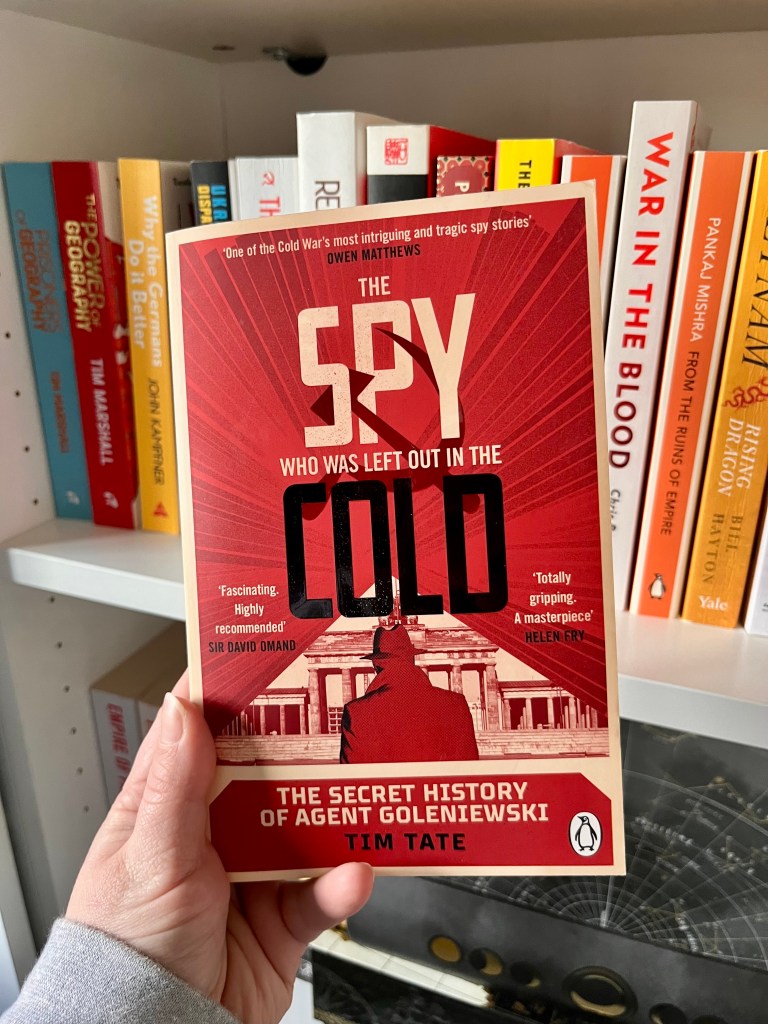
If it’s not obvious from my rating, I thoroughly enjoyed this book. And if you read the book, you’ll understand why I constructed that first sentence the way I did.
That being said, this book reads like a novel, but it’s a true story about a Polish secret service officer, Michal Goleniewski, who also worked for the KGB and defected to the West only to fall out of favour and eventually claim he was a Russian prince.
You can’t make this stuff up.
It’s a fascinating read that gives insight into a side of the Cold War that most of us probably aren’t very familiar with as well as some context on life behind the Iron Curtain. It’s told in a linear, narrative format, which makes it super easy to read (except for the fact that the protagonist keeps changing his name), and it was genuinely enjoyable in addition to being informative.
The author also includes stories of other spies at the time, which add context and interest to Goleniewski’s story. For example, in reference to a British man eventually convicted of espionage, a quote from this book reads:
“If British authorities in the 1950s took no interest in the home lives of their employees – even when these included evidence of domestic abuse – Houghton’s other activities should have raised serious concerns.”
p. 36 The Spy Who Was Left Out in the Cold
Then follows several pages describing how Mr Houghton, an Admiralty Clerical Officer at the British Embassy in Warsaw, who Goleniewski revealed as a traitor, regularly went out late at night, had over guests who he would try to hide from his wife and had a suspicious source of funds, all clear markers that he may have been working as a mole for an enemy state. His wife warned the British government about this twice, yet the Admiralty dismissed these warnings as “the outpourings of a jealous and disgruntled wife.”
Perhaps if they had listened to her, they would have caught the mole sooner.
If you’re not usually a fan of non-fiction or you find it boring or hard to read, this is a good one for you as it has a fairly linear narrative style with interesting characters, setting and plot. It’s also a fascinating look at a formative time in the world of espionage, especially in the U.S., and how heavily our trust of our information sources influences our actions.
 The Kat Bite