
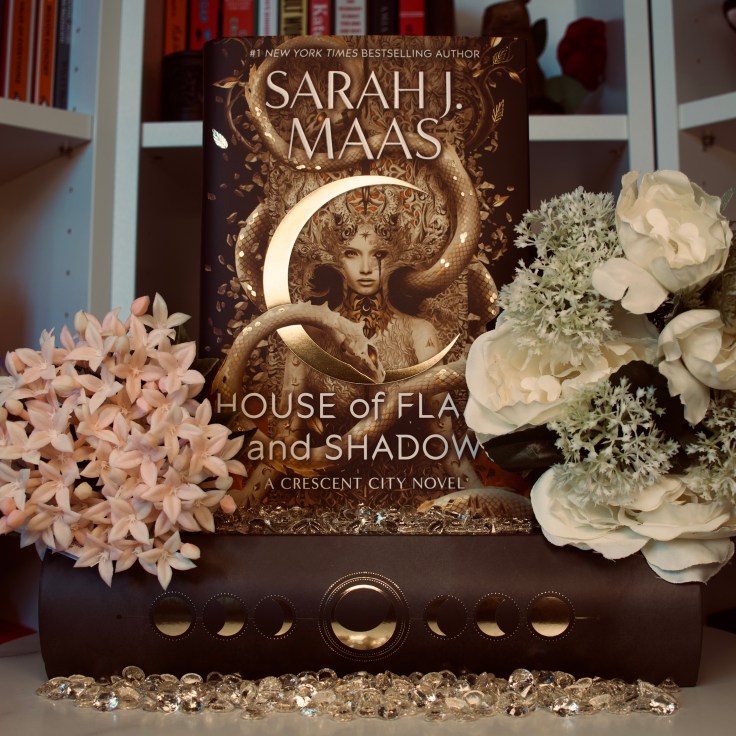
Crescent City 3: House of Flame and Shadow
Author: Sarah J. Maas
Genre: Fantasy
Rating: ⭐️⭐️⭐️
**Warning: this review contains spoilers for Crescent City 2**
I have been waiting two years for the third instalment in the Crescent City series, but I have very mixed feelings about this book.
Let’s start with the good. I wrapped up a lot of the storylines left unfinished in Crescent City 2, and it had some very satisfying scenes. I also really enjoyed the A Court of Thorns and Roses crossover element and the backstory and character development we got from some characters.
Now for the bad. There was too much going on in this book. This is a multi-POV, and it’s over 800 pages and takes place over the span of about a week. There were characters introduced that seemed to just be there to develop other characters, and it felt very crowded at times.
Tharion’s entire storyline (and some of Ithan’s as well) seemed to be thrown in to set up the next book. I believe this was originally only supposed to be a trilogy, but it’s recently been confirmed there will be another book, and considering what happened with Tharion in this one and the naming conventions of the three books so far, I would assume it will be titled House of Many Waters and feature more of the mer.
Given how this book ended, the next book doesn’t feel necessary except to tie up the new threads Maas unravelled, which I didn’t feel were needed for this story. Honestly, if there was no plan for a fourth book, we could have just left Tharion with the Viper Queen and the whole story would have probably still worked out just fine exactly the way it did.
There were also some technical problems like pacing issues and some parts that dragged and infodumped, which could have been improved on.
I know a lot of my criticism is probably influenced by really high expectations of Maas as well as comparison that I can’t help do between this series, ACOTAR and Throne of Glass. But though Crescent City was my first introduction into the Maasverse and I really loved the first two books, even the characters in this seemed to fall flat.
I do think I need to reread the series a bit closer together. I read the first two books within a few months of each other, and though I usually don’t read series like this back to back, two years is still quite a bit of time between books, and I wonder if some of my emotional attachment to the characters that built up in books one and two has faded.
Ultimately, still worth a read if you read and liked the first two if for no other reason than it finishes off the plot, but this is probably one of my lowest-rated Sarah J. Maas books.
Bringing Down the Duke
Author: Evie Dunmore
Genre: Historical Romance
Rating: ⭐️⭐️⭐️.75
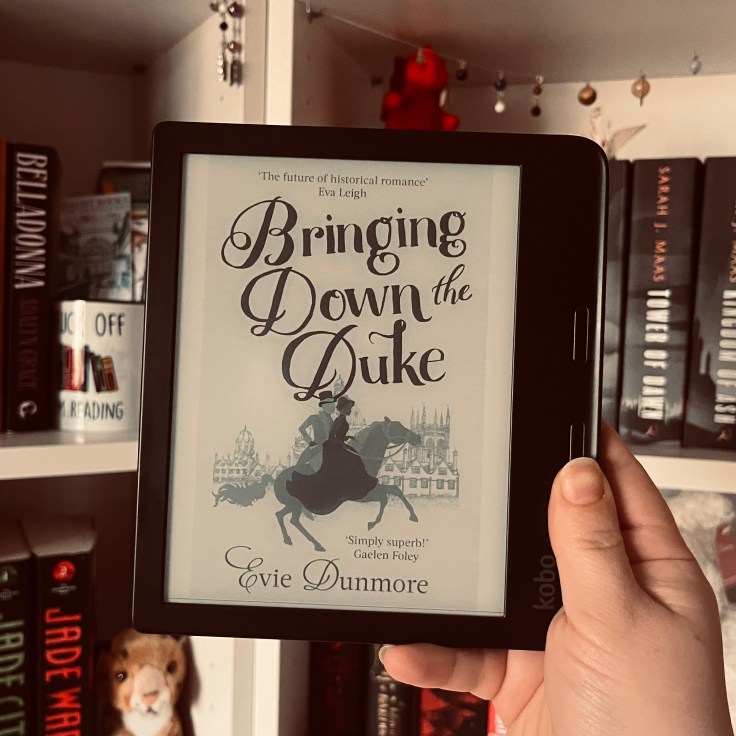
This book was a delightful find. It’s set during the Victorian period in England, and follows a young woman who is one of the first to enrol at Oxford and is sponsored by a suffragist group that is seeking to amend the Married Women’s Property Act, which transfers ownership of all of a woman’s property (including herself) to her husband upon marriage. As part of their fight, the FMC, Annabelle, is sent to convince a Tory duke to back their cause, and as this is a historical romance, I don’t need to tell you what happens next.
It was a little long for what it was, but it was overall a good time. This is the first in Dunmore’s series: A League of Extraordinary Women about a group of friends in this suffragist group, most of whom are also academics at Oxford as well. It deals with sexism that was present in the Victorian period a bit more bluntly than most historical romances, which, for me, made it more interesting as all of the women in this series not only dream of having lives defined outside of marriage, but are also fighting for them.
I found Annabelle’s character interesting. I think it would have been easy for Dunmore to make her an eager young woman determined to fight for equality for herself and the rest of women in England, but often I got the feeling that she couldn’t care less about the Married Women’s Property Act (the part of the plot that doesn’t revolve around the romance), perhaps because she had no property of her own. She wanted the opportunities that greater equality could give her, like being able to study in the same way men did, not have her mind underestimated because of her sex, and not have a contrived concept of honour enforced upon her, but she seemed ambivalent to the Cause until near the end. This was, perhaps, realistic given her character’s situation, though it did feel a bit odd at times because though she was in what was at that time a radical feminist setting, she was not a radical herself.
While I liked the relationship between Annabelle and the duke, Sebastian, it was very much predicated on sexual attraction on both sides, which I felt was leaned on too heavily as a basis for their relationship.
That being said, it was ultimately a very enjoyable read, and it motivated me to immediately download the next one, which I liked even more.
A Rogue of One’s Own
Author: Evie Dunmore
Genre: Historical Romance
Rating: ⭐️⭐️⭐️⭐️
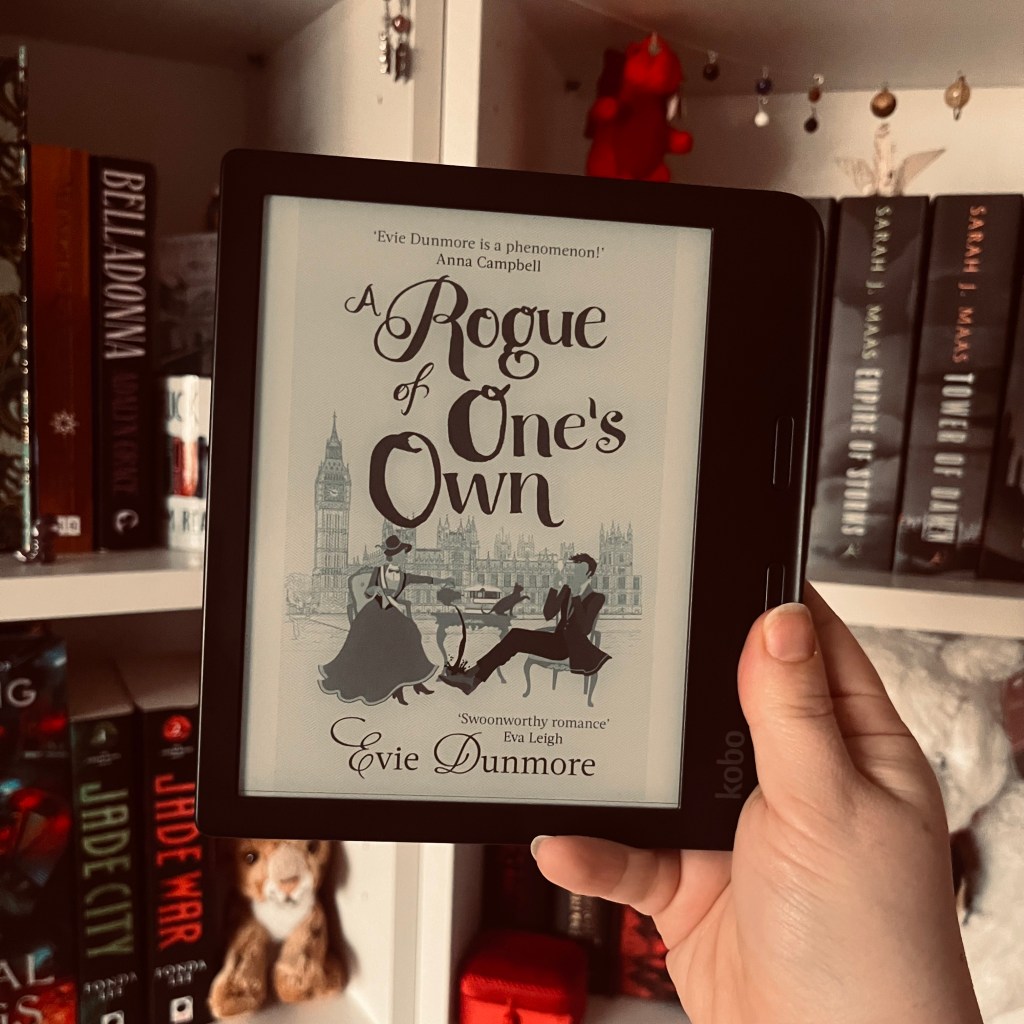
This instalment of A League of Extraordinary Women follows Lucie, the daughter of an earl who was partially disowned by her family when she became a radical suffragist. She lives in Oxford on an inheritance from her aunt with her cat, Boudicca, and, as continued from the first book, she is trying to amend the Married Women’s Property Act. For this she gathers investments from a group of wealthy women to buy a stake in a publishing house that owns several popular mainstream women’s magazines.
In addition to the suffragist storyline, there is the hate to love relationship between Lucie and her childhood nemesis Lord Ballentine, who owns the other half of the publishing house and doesn’t want Lucie to use the publications to spread “radical” messages for fear it will tank his investment, which he’s relying upon as his father seems close to cutting him off. It’s a classic story of rake falling for a woman who the rest of society has cast as a shrew but with the twist (and I don’t think this is a spoiler because it seems obvious from the first time we get his POV) that he’s been in love with her since they were children.
I loved the relationship between the two of them. Unlike the first, although they had that underlying attraction, it also felt like there was a deeper connection in their relationship, and they both contributed to the other’s character development in a positive way.
The only thing that was a bit icky was the premise that kickstarted their romantic relationship where he offers her the additional one percent share of the publishing house that she needs from him in exchange for a night together. Although Dunmore makes it quite clear that they’re both willing and genuinely attracted to each other, this seems like a skeevy way to start a relationship, no matter the time period.
Despite this, I did love the book and found it quite compelling and entertaining.
 The Kat Bite