
Author: bell hooks
Rating: ⭐️⭐️⭐️⭐️✨
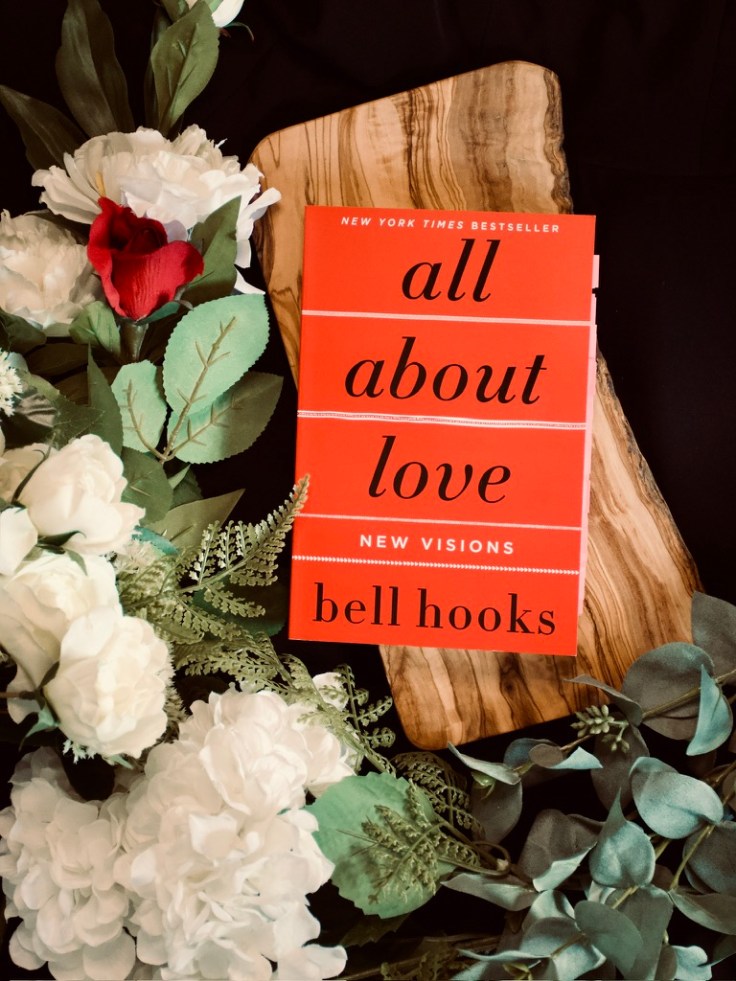
In this book, bell hooks challenges the cultural norm of seeing romantic love as the “ultimate” love that people can have. She observes that we’re told to value this sort of love over the kinds we have with friends or family, and questions why this is.
At the same time, she challenges the paradigm of love as a feeling and points out that love is not just a feeling, but it’s primarily an act. We choose to be loving by caring for those we love, by listening, providing emotional support, by giving our time and attention and prioritising another’s needs on the same level as our own.
But she also points out that we can be too individualistic in love, thinking that if we’re not feeling great all the time, we should dump our partner and try another. This is something I hear a lot of discourse about this now in terms of how online and app-based dating has tricked us into thinking there’s this endless supply of potential partners out there, and so people are too quick to get rid of early relationships if they’re not blissfully happy. And she’s writing this in 2000, before Tinder and most online dating sites existed or were popular.
“Many people want love to function like a drug, giving them an immediate and sustained high. They want to do nothing, just passively receive a good feeling. In patriarchal culture men are especially inclined to see love as something they should receive without expending effort. More often than not they do not want to do the work that love demands. When the practice of love invites us to enter a place of potential bliss that is at the same time a place of critical awakening and pain, many of us turn our backs on love.” Page 114
Now, I don’t think she’s saying that love should be a chore and that you should just stay in relationships that you hate, but I think she has a point about a romanticisation of love as being this easy thing that when it’s right is just constant bliss. But that’s not what life is, and so the key point that we don’t often get from media or literature is understanding that love can sometimes require work. Additionally, we have to be careful not to swing to the extremes of either love where one party is absorbed into the other and their entire life becomes about loving another person, where the love they receive in return is conditional on that devotion, or the other extreme of an antagonistic relationship where partners are keeping score or trying to make everything equal and feeling resentful if they don’t feel like their getting as much out of it as their partner.
One of the things that struck me about this book was how I think it was ahead of it’s time. Some of the examples and observations she has in here about people filling the void of lovelessness with material possessions or chasing work and money rather than spending time developing meaningful relationships, or even the dynamic she describes between men and women that would today be summed up in the boy-mom and adult toddler men archetypes, are all things that I see going around social media and commentary/opinion circles nowadays.
I’m not saying she was necessarily the first or only person to make these observations in the late nineties when she was probably writing this, but it’s interesting that these are still things that we’re talking about a quarter of a century later.
One of the things she speaks about in later chapters is also having a “love ethic” for society. This is the concept that things like law or public policy, etc should be based on love for each other as humans. And while I agree with her that we should be concentrating government policy on making sure that people are properly provided for and that everyone has a basic level of comfort while trying to enrich as many people’s lives as possible, the argument was a bit too abstract. It kind of smacked of “if [humans] were angels”. So I’m not sure if it’s defined enough, as she defined it, to be useful.
That being said, no one needs me to tell them that bell hooks is both insightful and unafraid to challenge societal or cultural norms. After reading her thoughts as well as examples of how she’s incorporated these beliefs into her life in what some would term a radical way, I have similar feelings about her as I do David Graeber, as someone who will just tear apart your assumptions and make you wonder “why?”. Why do you believe that this is the way that you need to relate to your family, your partner, your friends, or other people? Is there a better way to both conceive of and practice love? How would the world be better if we challenged these seemingly inherent notions?
Definitely brilliant and a must-read.
 The Kat Bite
Leave a comment