
Author: Sonia Purnell
Rating: ⭐️⭐️⭐️⭐️⭐️
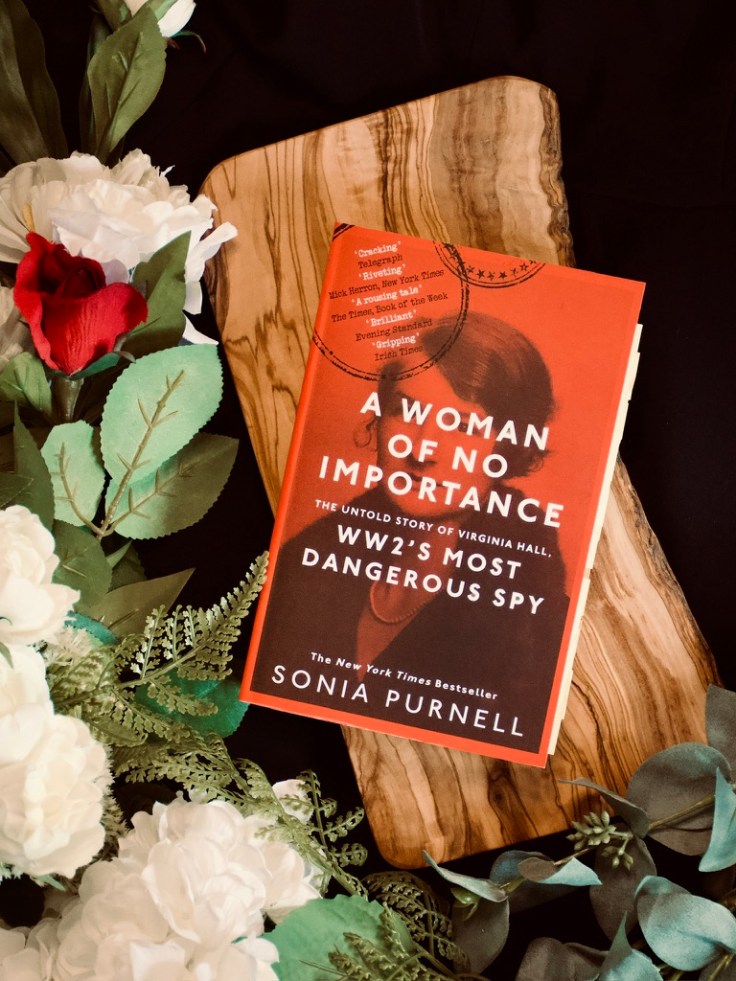
This was an amazing book. Firstly, the subject was amazing, but also, the author did such a good job documenting her story.
This is the story of Virgina Hall, an American woman who worked for the Special Operations Executive (SOE), which was an espionage agency formed in the early days of WWII by the British to aid local resistance movements in occupied parts of Europe. She worked in France and was instrumental to the resistance there. She went undercover as a journalist and passed intelligence on what the Nazis were up to in France to the Allies. She curated contacts that could pass intelligence and harbour agents on the run. She organised operations that helped spies escape prison camps.
She also later worked for the Office of Strategic Services (OSS), which was the American precursor to the CIA. At that point, she recruited guerrillas to sabotage the Nazi communication or transport in various parts of France to make it harder for them to operate as well as divert or delay them from engaging with Allied troops. Tactics used included exploding (fake) horse poop and changing around signage on local roads to direct the Nazis away from areas where Allied military operations were taking place.
And she did all this not only as a woman in the 1940s but also with a wooden leg, which is significant because not only did her leg give her a distinctive gait, which made it harder for her to blend in, but she couldn’t do things like run, which can come in quite handy if you’re attempting to hide from Nazis.
In addition to documenting her time in Europe as well as how she got there and some of her life after the war, this book just gives such a rich historical context to what life was like under Nazi occupation: the atmosphere of suspicion, the casual brutality, and the devastating loss even for those who survived.
It also gave a really interesting insight into the world of espionage, which is, by nature, secret, and not something we learn about as much in relation to this part of history. But working undercover is — or at least was at that time — a very solitary undertaking. These spies didn’t know who they could trust, and they often kept things secret even from allies to protect themselves in the event that one of their compatriots is captured or decides to turn on them.
There was a chapter that talked about the deep psychological toll this took on Virginia as well as others who were operating with her. That kind of isolation over months or years, living in constant fear of the Gestapo pounding on your door. A lot of these operatives took various drugs to help them stay awake or go to sleep, which caused long-term health problems later.
This book also shows the very real ways that she was discriminated against as a woman and as someone with a disability. Even though there was no evidence either of these impacted her performance in the field and she was arguably one of the most qualified and experienced undercover operatives during her time there, she was constantly being overruled and undervalued by egotistical men who were basically threatened by her.
“In its own secret report of her career, the CIA admitted that her fellow officers ‘felt she had been sidelined—shunted into backwater accounts—because she had so much experience that she overshadowed here male colleagues, who felt threatened by her.’” (page 346)
This was an amazing and engaging read, and I would highly recommend it for anyone interested in WWII, spies or incredible women. It was compelling and intriguing and will probably end up being one of my favourite books of this year.
 The Kat Bite
Leave a comment