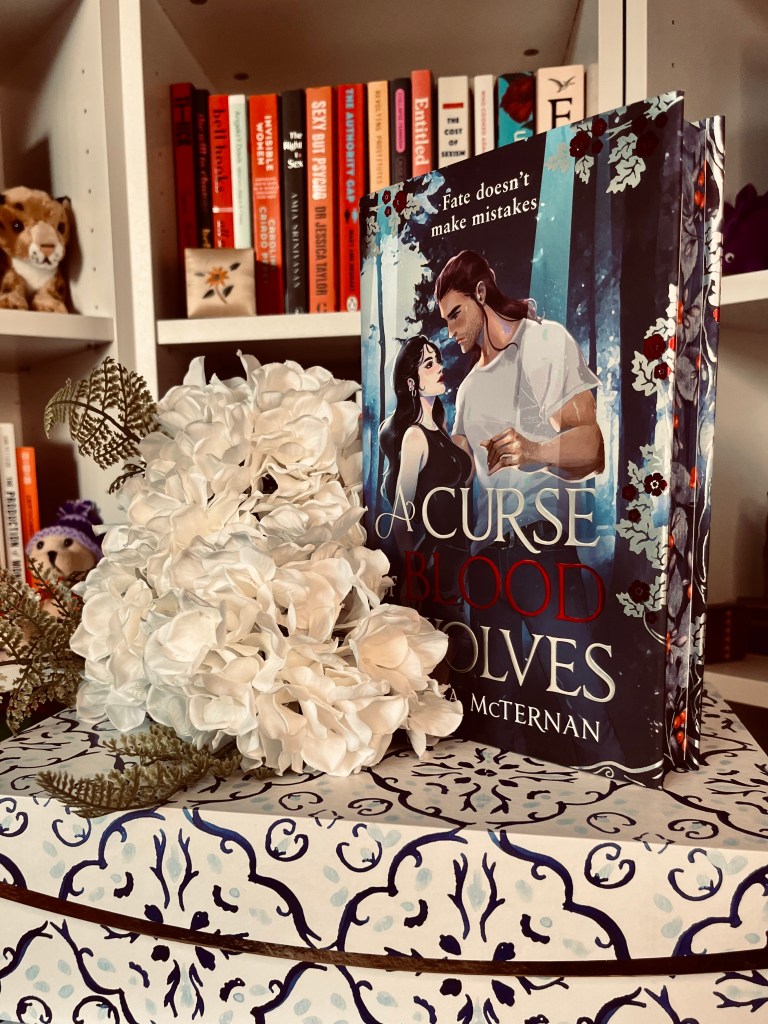
Author: Melissa McTernan
Rating: ⭐️
I don’t think this book was written by an AI, but I’m confident that if the author had put the general tropes and vibes she was going for into ChatGPT and asked for a story outline and character profiles, it would have spit out what was in this book.
This was the most generic, cliched, unoriginal book I think I’ve ever read, so much so that some parts of it almost read like a parody of this kind of book. In my opinion, it’s the embodiment of what people complain about when they moan about the overproduction of books where both indie authors and traditional publishers crank out books with certain tropes and vibes to capitalize on popular trends.
This book is billed as a dark, Little Red Riding Hood-inspired, shifter romance. In this story, we follow Ruby, a bartender living in a small town and working as hard as she can to provide for her sister who has some sort of long-term sickness that is baffling doctors. As Ruby works at a bar, she often gets off work very late at night, but rather than walking home through well-lit streets, she likes to take a shortcut through the woods.
In those woods, lurks Rafe, a wolf shifter who feels an odd need to protect this intriguing woman who strolls through the trees late at night. She can feel him watching though, and one night she confronts him about it, because despite the fact that she’s kind of into the feeling of being stalked, she knows it’s creepy and she’s in danger.
This sets off a series of events, as Ruby and Rafe’s lives become entangled when she apparently sparks the interest of some other wolf shifters, and Rafe feels he needs to protect her.
The primary plot of this book is definitely the romance, with the non-romantic conflict coming from the antagonistic shifters conveniently there as a device to force our main characters together. However, this book relies heavily on the trope of fated mates to do 99% of the lifting for any sort of relationship-building or connection between the two main characters.
Neither of the characters was well-defined enough for me to form a connection to them as individuals, so watching the author attempt to link them romantically was painful. Fated mates can be a fun trope to cause conflict between two characters when they either don’t like each other or one or both don’t know about the bond, but it can also be used as a crutch to explain feelings the characters have for each other.
This is lazy and unbelievable and takes all the fun out of a romance which is about seeing two (or more) people actually form a romantic bond based on personality, shared experience, and mutual connection and understanding. None of that was present here, and the whisper of the paranormal plot was boring, unoriginal, and, by the end of the book, still unresolved.
I’m sad to say that I found nothing either interesting or redeeming about this book, and generally would not recommend investing time in it.
 The Kat Bite
Leave a comment