
Author: Lynsey Hanley
Rating: ⭐️⭐️⭐️⭐️⭐️
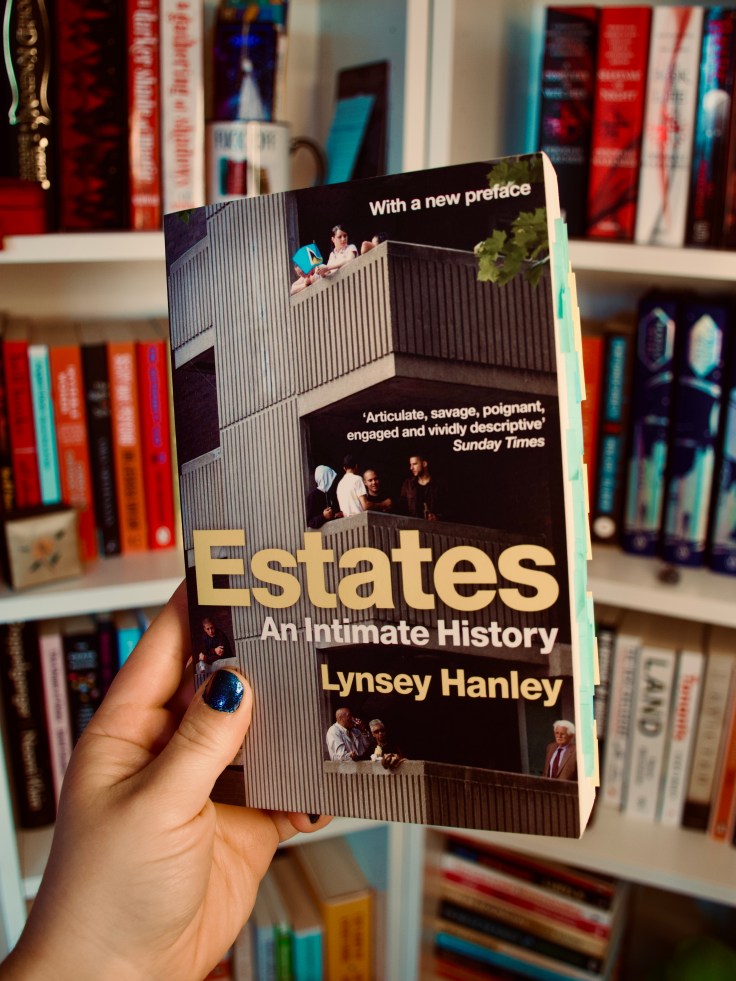
This book traces the history of council housing in the UK, which is housing owned by the local authority and usually rented to low-income people for a fraction of the price of market rent.
Most council housing was built after World Wars I and II in an attempt to clear the slums that had sprung up especially in big English cities. Housing is obviously such a crucial part of people’s wellbeing that it’s often inexorably linked to other things like health, safety, or the ability to maintain gainful employment. So, the government after both wars worked very hard to build council housing so that citizens and returning soldiers, would have a secure place to live.
In this book, the author traces the history of council housing and not only how it was created but how it went from being this national asset and a source of pride like the National Health Service, to being synonymous with poverty and crime. It used to be a fairly normalised thing that people would either own their home or they’d live in council housing and a very small percentage of the population rented housing privately, but it’s often now seen as a shameful marker of being lower class in a sort of nonsensical way. People usually aren’t ashamed to say that they were treated at NHS hospitals or went to state schools, but living in housing provided by the government is somehow a sign of failure in a way the first two aren’t.
This book, like Evicted, also highlights the profit motive of certain interests in maintaining a shortage of publicly owned housing. Not only does this put more of the housing supply in private hands, but it also means that the government who, in the UK, is obliged to provide housing to people in certain circumstances has to use taxpayer money to pay private landlords for housing at market rates, which means that private landlords get to pocket some of that money as profit. And it’s pretty much the same thing in any sort of system in which benefit recipients are living in privately-owned housing, some amount of taxpayer money is going towards landlord profit rather than the actual cost of housing and maintenance.
Thank you capitalism.
This book is very informative and draws from personal experience. The author grew up in council housing and highlights both the history of the institution but also a lot of the psychological impacts of housing design. Specifically how the way a building or neighbourhood is laid out and what amenities it has (community centres, restaurants, shopping, transport, etc) all contributes to the mental wellbeing and attitude of the residents.
This book was also very interesting and enlightening, and if you’re interested in housing. I’d highly recommend it.
 The Kat Bite
Leave a comment